After India’s knee-jerk accusation of Pakistan being responsible for the Pulwama suicide bombing (14 February 2019) by a bitterly desperate, born-and-bred local Kashmiri youth, New Delhi had doggedl...
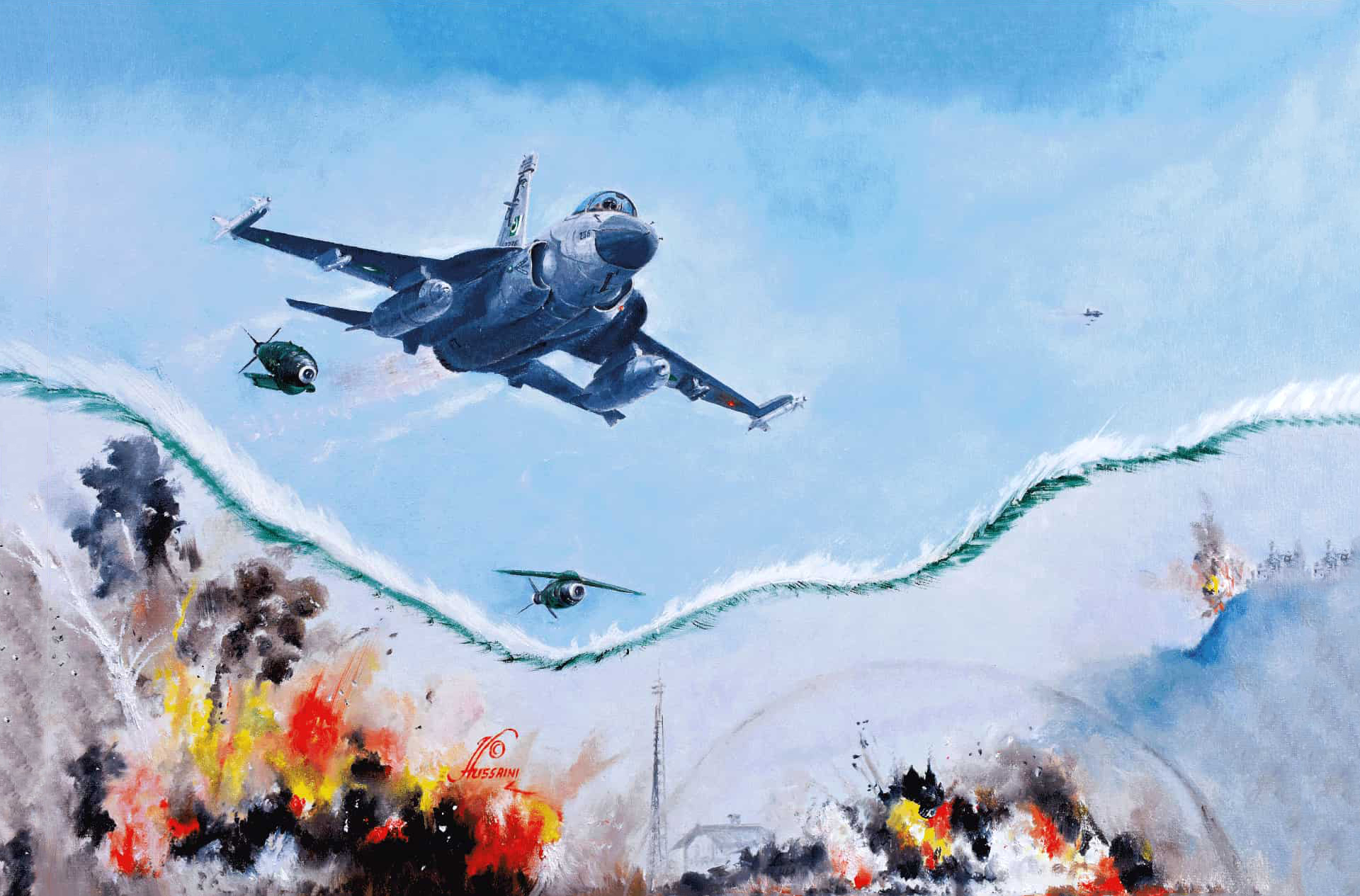
After India’s knee-jerk accusation of Pakistan being responsible for the Pulwama suicide bombing (14 February 2019) by a bitterly desperate, born-and-bred local Kashmiri youth, New Delhi had doggedly refused to share any credible evidence in support of the false allegation. Rejecting Pakistan’s offer of immediate cooperation in the Pulwama investigation, the BJP rulers chose the warpath instead, to exploit the tragedy to bolster their votes in the approaching April-May elections. Clinging to their easily refutable propaganda about Pakistan, they recklessly gambled the security of all Indians by risking a general war with Pakistan. On 26 February, India’s government ordered its air force to bomb a Pakistani seminary in Balakot (K-P) that would have murdered 200 children (8-15 years), had it not been for the incompetence of the IAF pilots, which caused the bombs to hit no targets and to inflict no casualties or damage. India then claimed it had killed 300 Pakistani militants at Balakot, much to its subsequent embarrassment for that lie. But India largely escaped strong condemnation for its violations of international laws by offering to the world’s powerful trading nations India’s attractive consumer markets and lucrative Indian defence contracts. Many senior Indian politicians and retired military leaders condemned PM Narendra Modi’s crass use of military power for winning elections. On 26 February, the Pakistani nation and its armed forces were more than ready for any eventuality. Air Chief Marshal Mujahid Anwar Khan ordered that his country’s first response to the Balakot violation was to be delivered by "Operation Swift Retort" of the Pakistan Air Force. After talking with all the pilots who flew this mission, artist Hussaini has visualised here the PAF’s retaliation at the doorstep of Indian Army’s deployed brigade in the Poonch-Rajauri-Naushera sector. The two time-separated panels of the painting (bomb-release in the upper view, bomb impact explosions in the lower scene) show Wing Commander Adnan as he releases his 1,000-Lb guided bombs, one of which has already extended its wings and the other is about to do so. At the same time, his wingman, Squadron Leader Sibtain (tiny image, visible at a distance on the leader’s left, in the upper panel), is doing the same. The lower panel shows the scene about 60 seconds later, and some 40 miles from the two Thunders. In the foreground are the two explosions by Adnan’s bombs, carrying the intended message: “You were lucky your attack failed at Balakot. Think deeply before impulsively rushing up the escalation ladder the next time”. The painting also shows the expanding arc of a momentary shockwave caused by one of the bombs. Viewers may also note - at the right edge of the lower panel - Sibtain’s simultaneously exploding bombs that he delivered with the same accuracy as his leader, and precisely matching the time on target (TOT) given to his leader.